

The Big Picture
On the radar this week: a breakdown of hypersonic re-entry methods, the new bottleneck for spacecraft design, NASA prioritizing debris tracking efforts, and a new control system for spacecraft rendezvous.
Surviving the Shockwave
When a spacecraft enters the upper atmosphere at Low Earth Orbit velocities (roughly 7.8 km/s), it carries A LOT of kinetic energy. To land safely, nearly every joule of that energy must be dumped into the surrounding air before impact. This makes the air very angry.
Contrary to popular belief, most re-entry heating isn’t caused by surface friction, but rather ram compression. When your vehicle slams into thin upper-atmosphere air at hypersonic speeds, atmospheric gas can’t move out of the way fast enough. As it piles up, it compresses violently into a shockwave, converting kinetic energy into heat and ionizing air molecules into a glowing, 2000°C/3600°F plasma sheath.
Peep this equation:
There’s 3 values that are important to us here.
qc = Convective heat flux (we want to keep this low)
v∞ = Vehicle entry velocity
rn = Radius of the vehicle’s nose curvature
As you can see, heat flux scales with the velocity cubed. Doubling your entry speed increases thermal loading eightfold.
On the bright side, heat flux scales inversely with the square root of the “nose” bluntness. This means that for re-entry, the less streamlined your body is, the better. Who’da guessed that bellyflopping beats diving?
In 1953, H. Julian Allen proved that making a vehicle’s nose blunter (increasing rn) pushes the superheated bow shockwave further away from the skin, dumping >90% of the heat into the surrounding airstream rather than the hull. This single discovery made manned spaceflight physically possible.

However, the remaining 10% of thermal energy is still enough to melt structural aluminum or carbon composite in seconds. Your vehicle needs to be able to tank it and walk away.
Every unique vehicle drives its own Thermal Protection System (TPS) design, but they all fall into a few categories.
Option 1: Disintegrating on Purpose
This is the original old magic. It’s been used since the Gemini capsules and even on ballistic missiles before that. It’s still used on NASA’s Orion and SpaceX’s Dragon capsules.
Ablative shields use materials like PICA (Phenolic-Impregnated Carbon Ablator), which absorb heat by intentionally destroying themselves. As the temperature rises, the resin matrix inside its porous carbon structure vaporizes (pyrolyzes). This gas expands outward through the surface, blowing the superheated boundary layer away from the hull while leaving behind a highly insulating carbon char layer.
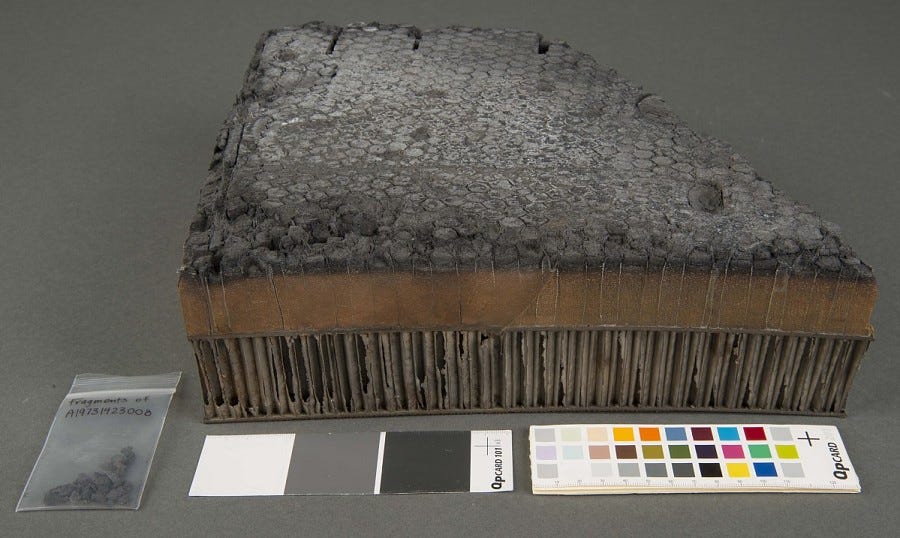
This system provides unmatched thermal protection to slow down from high speeds, like lunar/interplanetary returns. However, it comes at the cost of reusability.
Ablative heat shields are heavy, single-use, and susceptible to pockets of char recession that make swapping in a new one challenging. This complicates rapid reuse of your vehicle.
Option 2: Store as Much Heat as Possible
Every year or so, this video bounces around the internet. In it, someone takes a sample of Space Shuttle tile material out of the 2200°C oven and touches it with their bare hands just seconds later.
Source: Roscket Tasartir on YouTube (full video)
This isn’t some cheap trick - in fact, it might be one of the most expensive demonstrations out there. As a taxpayer, I don’t wanna know.
It works because heat travels through this material extremely slowly. Even when superheated, a coupon of this material acts like a heat battery, storing a ton of thermal energy and slowly trickling it back out. It will take hours to cool back to ambient temperature.
This is also Starship’s approach to surviving re-entry.
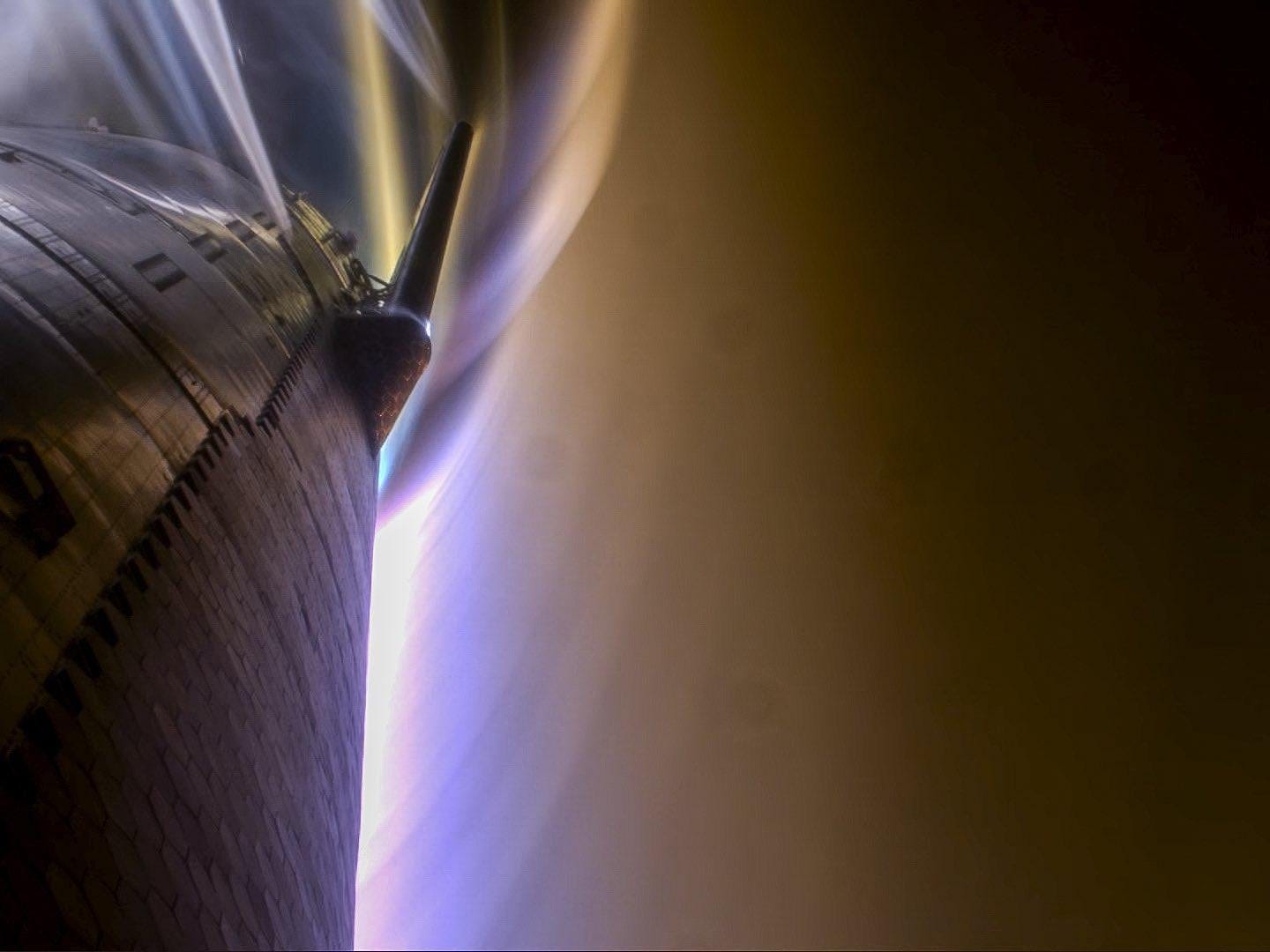
Rigid silica tiles rely on extreme thermal insulation and high surface emissivity. Made of 99.8% pure amorphous silica glass fibers, these tiles are mostly air by volume. This air remains trapped in the tile and absorbs the heat of re-entry, while barely transmitting any heat to the hull beneath.
But, like any solution, there’s a trade-off.
Silica tiles can withstand 1,400°C+ repeatedly without degrading, but they are essentially brittle glass. On Starship, 18,000 individual hexagonal tiles must be mechanically pinned to a stainless steel hull that expands and contracts under thermal cycles. If a single tile pops off, that hot plasma directly impinges on the underlying steel skin, threatening structural burn-through.
On the Space Shuttle, NASA engineers were accustomed to seeing minor tile damage from ice and foam on the orbiter. Refurbishing a shuttle took a very long time, partially because workers had to inspect, test, and hand-replace hundreds of damaged or loose tiles after every landing. This was exacerbated by the fact that no two tiles were the exact same size or shape.
On Starship, the tiles are standardized to simplify reuse, but there are still unique geometries required to wrap-around the fins and shield other non-uniform areas. SpaceX have yet to fly the same Starship orbiter twice, so we’ve yet to see how the vehicle can handle cycling.
This option’s heat shielding capability has been flight proven time and time again on Shuttles and Ships, but its capability for rapid reuse has yet to be demonstrated.
Option 3: Make Your Vehicle Sweat
Active transpiration cooling is where liquid or gas coolant is forced directly through micro-porous skin panels to squeeze onto the outer surface, where it absorbs heat and wicks away.

It has never been used to re-enter a full-scale orbital production vehicle. However, film cooling has been used inside high-heat rocket thrust chambers and turbopump exhaust liners for decades.
In 2012, the German SHEFEX II (Sharp Edge Flight Experiment II) ran an active transpiration cooling panel directly through one of the high-heat belly tiles. Thermocouples embedded in the panel measured an immediate surface temperature drop of over 200°C compared to adjacent uncooled reference tiles during peak heat flux.
Earlier design concepts for Starship proposed a double-walled, transpiration-cooled skin in 2019. But SpaceX abandoned the full-vehicle concept when arc-jet testing revealed susceptibility to pore-clogging from soot and atmospheric debris. Rocket acne.
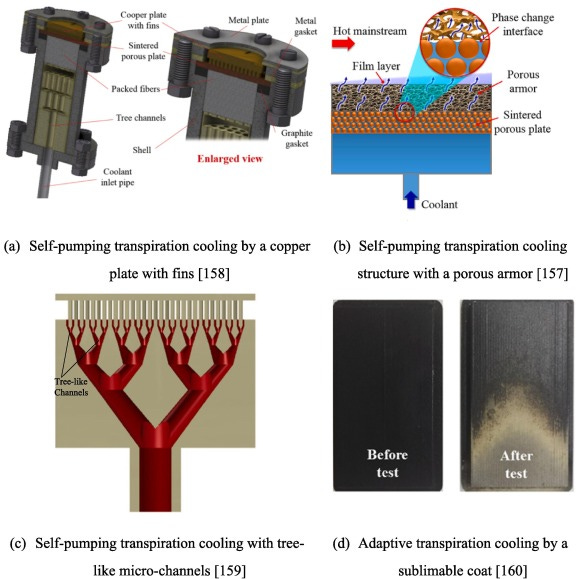
As SHEFEX proved, transpiration cooling may be best suited for ultra-sharp, low-drag re-entry profiles. As we discussed earlier, sharpening your vehicle’s “nose” means it takes on a lot more heat as compared to a blunt face which pushes the heat into the surrounding airstream. You’ll also gather localized hotspots along the knife’s edge.
So why would you want to be pointy?
You can enter like an airplane, instead of like a rock. A sleeker profile allows your vehicle to benefit from lift, allowing it to perform aggressive turns in the upper atmosphere. Instead of landing along a predictable parabolic footprint, a low-drag sharp vehicle can maneuver thousands of kilometers to reach virtually any runway or landing site on Earth from a single orbital pass. Or in the case of weapons systems, any target.
Being able to pick your landing site also means you save a lot in recovery costs. Compare the shuttle landing at Kennedy to a blunt capsule splashdown requiring specialized sea-retrieval ships.
Gliding is a whole lot more comfortable than slamming into the air. With a spaceplane profile, you can expose the people and/or payload on board to a lot fewer G’s of acceleration. Useful if your passengers are high-maintenance.
So transpiration cooling is useful to enable low-drag vehicles like spaceplanes and warheads.
However, mass penalties spent on the plumbing and the risk of catastrophic localized hot-spot burn-through if even a fraction of the pores become blocked mean that this is a specialized solution with limited use in the space industry.
Also, your vehicle might need some deodorant.
Option 4: Stoke Space’s New Groove
To compete with the tried and tested technologies of yore requires great confidence in your fledgling design. With their efficacy and decades of flight data, ablative shields and emissive tiles won’t go down without a fight.
Stoke Space is proposing a new re-entry architecture for the reusable second stage of their Nova rocket. This design replaces ceramic tiles and ablators with a high-temp metallic heat shield (Niobium/Inconel alloy) actively cooled from behind.
During re-entry, sub-cooled liquid hydrogen propellant is pumped through an intricate network of internal micro-channels embedded directly inside the metallic heat shield. The cryogenic propellant absorbs peak heating via forced convection before being routed into the rocket’s engine for landing. This has the added benefit of pre-warming the fuel before it reaches the engine, which improves performance by smuggling in thermal energy from re-entry.
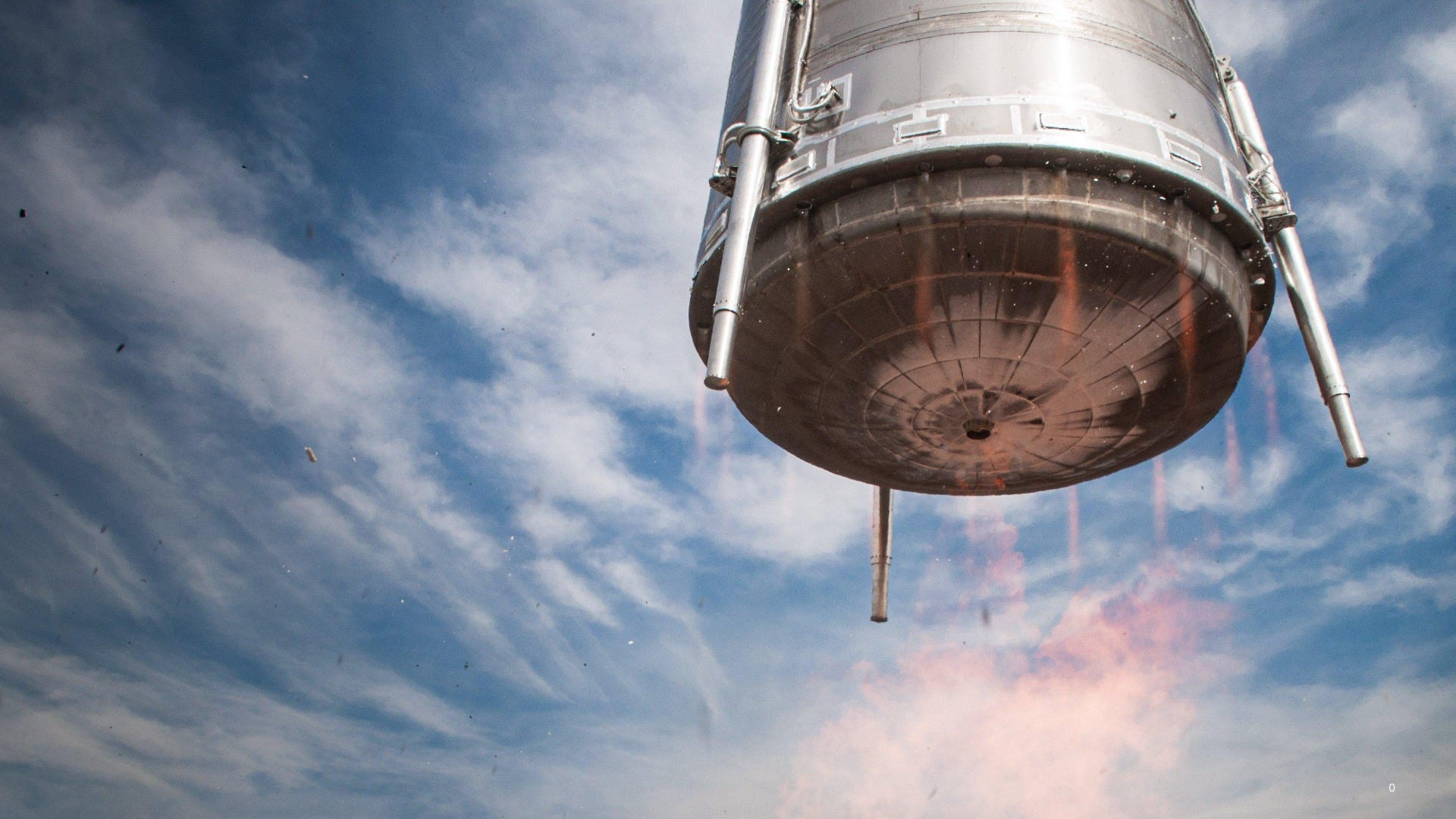
This is the same principle as regenerative cooling, a technique that’s already actively used on many rocket engines. The nozzle is cooled by channels carrying cold fuel, and then the warm fuel runs to the combustion chamber to be ignited. Stoke is simply adding their heat shield into the cooling circuit.
Stoke’s system completely eliminates fragile, maintenance-heavy silica tiles and single-use ablators, enabling rapid turnarounds with zero thermal shield refurbishment.
However, it requires flawless fluid dynamic balance across hundreds of micro-channels. If propellant flow starves or cavitates locally, the metallic surface will instantly vaporize under hypersonic plasma loads. That said, if your propellant flow fails you’ve already got some major problems.
The big “but” is that it’s never been done before.
We’re rooting for Stoke - this industry can always use some competition and fresh ideas - but whether this approach is successful and practical (read: cheaper than the alternatives) remains to be seen.
— — —
If you wanna get even more experimental, there may be a path to abandoning physical heat shields altogether.
Coming Next Week:
In the next issue, we’ll dive deep into Magnetoshell Aerocapture - using high-temp superconducting coils to generate magnetic fields which physically repel plasma, eliminate radio blackout, and could revolutionize deep-space atmospheric insertion.
Interesting Links and Papers
US Spacewalk 97 is set to occur on Tuesday, Aug. 18 - Anil Menon and Sophie Adenot’s spacewalk will begin at approximately 8:35 EDT and last about six and a half hours. (NASA)
Cheaper launch has moved the spacecraft bottleneck from mass to surface area - deployable radiators and solar arrays now drive satellite design. (SpaceNews)
NASA brings industry into the space sustainability conversation - building the software and infrastructure to locate and track Earth’s growing space debris problem. (Space Explored)
Genetic Fuzzy System-based Control for Spacecraft Proximity Operations - a new paper on robust spacecraft control amid orbital disturbances and sensor noise. This will enable better spacecraft rendezvous for on-orbit servicing and proximity operations. (ArXiv)
Upcoming Launches
CASC Long March 12 | SatNet LEO Group 24
Target Date / Location: Sunday, August 16, 2026 — 12:10 AM EDT (04:10 UTC) | Wenchang Space Launch Site, China
Details: Launch of China’s new 3.8-meter diameter kerosene/LOX medium-lift launcher.
LandSpace Zhuque-3 | Flight 2 Orbital Demonstration
Target Date / Location: Tuesday, August 18, 2026 — 07:35 PM EDT (23:35 UTC) | Jiuquan Satellite Launch Center, China
Details: Stainless-steel methane/LOX orbital rocket flight test evaluating booster recovery avionics.
SpaceX Falcon 9 | Starlink Group 17-50
Target Date / Location: Tuesday, August 18, 2026 — 10:00 PM EDT (Wednesday, 02:00 UTC) | Vandenberg SFB (SLC-4E), CA, USA
Details: Starlink.
SpaceX Falcon 9 | Starlink Group 10-39
Target Date / Location: Thursday, August 20, 2026 — 11:19 AM EDT (15:19 UTC) | Cape Canaveral SFS (SLC-40), FL, USA
Details: More Starlink.
SpaceX Falcon 9 | Starlink Group 15-20
Target Date / Location: Saturday, August 22, 2026 — 03:25 AM EDT (07:25 UTC) | Vandenberg SFB (SLC-4E), CA, USA
Details: More Starlink.
Space Job Openings
Full-Time
Planet Labs is seeking a Flight Dynamics Engineer, Orbits R&D located in San Francisco, CA.
Relativity Space is seeking a Launch Integration Engineer II located in Cape Canaveral, FL.
Rocket Lab is seeking a Senior Spacecraft Thermal Engineer I located in Long Beach, CA.
SpaceX is seeking a Sr. Space Lasers Engineer, Satellites (Starlink) located in Redmond (Seattle), WA.
Internships & Co-ops
Rocket Lab is seeking a Manufacturing Engineering Intern, Fall 2026 located in Long Beach, CA.
SpaceX is seeking a Summer 2027 Engineering Internship/Co-op located at a flexible SpaceX site.
Why Altru Space?
Altru Space is a technical deep dive on the space industry’s top stories, delivered weekly. We emphasize engineering excellence and sustainability to understand how we can make our world a better place and explore our next frontier at the same time.
The description does not appear to offer any possibility of using the planetary magnetic field or ion cloud as a braking mechanism, that would bring approach velocities down outside ('above') the maximum altitude where atmospheric heating becomes inevitable.